
Industrial machines work hard every day. They lift, move, cut, pump, press, and produce. Because of this, their moving parts need proper protection. One of the best ways to protect these parts is by using the right lubricant.
However, choosing an industrial lubricant is not as simple as picking any oil from the shelf. Different machines need different types of oil. In addition, factors such as temperature, pressure, machine speed, load, and operating conditions can affect which product is suitable.
Therefore, choosing the right lubricant can help reduce wear, improve machine performance, lower maintenance costs, and prevent unexpected breakdowns.
In this guide, we explain the key things to consider when choosing a lubricant for your industrial equipment.
Why Choosing the Right Lubricant Matters
Lubricants help reduce friction between moving parts. Without proper lubrication, metal parts can rub against each other. As a result, they can create heat and wear down faster.
The right lubricant creates a protective layer between moving components. Therefore, it helps the machine operate more smoothly.
Good lubrication can also help:
- Reduce friction and wear
- Control heat
- Protect against rust and corrosion
- Improve equipment performance
- Reduce maintenance costs
- Extend equipment life
- Reduce unexpected downtime
Furthermore, proper lubrication can help businesses protect expensive machinery. This is especially important for equipment that operates for many hours each day.
Understand What Your Machine Needs
Before buying any lubricant, first understand the machine you want to lubricate.
For example, an engine, gearbox, hydraulic system, compressor, and bearing may all require different products.
Therefore, ask these simple questions:
- What type of machine am I lubricating?
- What lubricant does the manufacturer recommend?
- What temperature does the machine operate at?
- What pressure and load does it handle?
- How often does the machine operate?
- What type of environment does it work in?
Most importantly, always check the equipment manufacturer’s manual before selecting a lubricant.
This is because using the wrong product can reduce performance and may cause damage.
Check the Lubricant Viscosity
Viscosity is one of the most important things to understand when choosing oil.
In simple terms, viscosity describes how easily an oil flows. A low-viscosity oil flows more easily, while a high-viscosity oil is thicker.
However, the best viscosity depends on the equipment and its operating conditions.
For example, an engine operating in a hot environment may require a different viscosity from one operating in a colder environment.
Therefore, do not choose oil based only on price or brand. Instead, check the viscosity grade recommended by the equipment manufacturer.
For example, Gulf offers products in different viscosity grades for different applications. Gulf Superfleet 15W-40, for instance, is a multigrade diesel engine oil designed for certain heavy, medium, and light-duty commercial vehicles. Gulf recommends checking the vehicle manufacturer’s manual for the correct specification and drain interval.
Choose the Right Type of Oil
There are different types of industrial oils. Each one has a specific purpose.
Engine Oil
Engine oil is designed to protect engine components. It helps reduce friction, control deposits, and protect the engine during operation.
Hydraulic Oil
Hydraulic oil is used in hydraulic systems. It helps transfer power while also protecting system components.
Hydraulic equipment can be found in excavators, loaders, agricultural machines, manufacturing equipment, and many other machines.
Gear Oil
Gear oil is designed to protect gears from friction, pressure, and wear. It is commonly used in gearboxes and other systems that use gears.
Compressor Oil
Compressor oil helps lubricate and protect compressors. The correct product depends on the compressor design and operating conditions.
Grease
Grease is useful for many bearings and moving parts where an oil may not stay in place. ISO 12924:2023 provides specifications for industrial greases used in applications such as bearings in machines and vehicles.
Because each product has a different purpose, using the correct type is very important.
Consider the Working Temperature
Temperature can have a major effect on lubricant performance.
If equipment operates at very high temperatures, the lubricant must be able to remain stable under heat. Similarly, equipment operating in cold conditions may need a product that can flow properly at lower temperatures.
Therefore, always consider both the normal operating temperature and the environment around the machine.
In addition, machines that work continuously may need lubricants with strong thermal and oxidation stability.
Gulf’s industrial lubricant range includes products designed for different applications, including synthetic industrial fluids for areas such as hydraulic systems, industrial gearboxes, and compressors.
Consider the Load and Working Conditions
Industrial equipment often works under heavy loads.
For example, construction equipment may operate under high pressure and difficult outdoor conditions. Mining equipment may deal with dust, heat, vibration, and heavy loads. Manufacturing equipment may operate continuously for many hours.
As a result, the lubricant must match the working conditions.
Before choosing a product, consider:
- Load
- Pressure
- Speed
- Temperature
- Operating hours
- Dust and dirt
- Moisture
- Outdoor exposure
The harder the machine works, the more important the correct lubricant becomes.
Gulf Lubricants for Different Equipment Needs
When selecting Gulf products, the most important step is to match the product specification with your equipment manufacturer’s requirements.
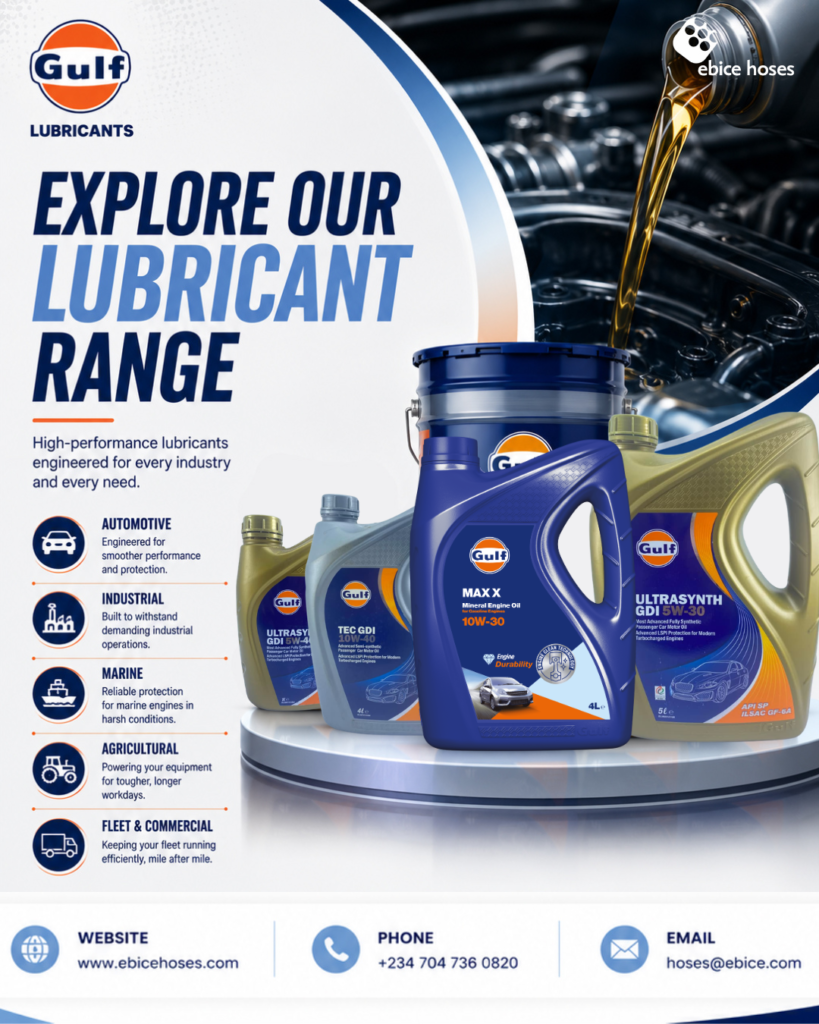
For example, Gulf’s product range includes engine oils, hydraulic fluids, gear oils, compressor oils, and other industrial lubrication products. This makes it possible to select a product based on the specific machine and application rather than using one oil for everything.
In addition, Gulf provides product specifications and application information for individual products. This information can help equipment owners and maintenance teams make better choices.
However, always check the product data and your equipment manual before purchase.
Do Not Choose Lubricants Based Only on Price
Price is important. However, it should not be the only factor you consider.
A cheaper lubricant may seem like a good way to save money. Nevertheless, if it does not meet your equipment’s requirements, it may lead to increased wear, poor performance, or more frequent maintenance.
As a result, the cheapest option can sometimes become the most expensive option over time.
Instead, consider the total value of the product.
A quality lubricant can help protect equipment, reduce wear, support efficient operation, and reduce the risk of unexpected downtime.
Follow the Manufacturer’s Recommendations
Perhaps the most important rule is simple: follow the equipment manufacturer’s recommendations.
The manufacturer normally specifies the required lubricant type, viscosity, performance level, and change interval.
Therefore, do not guess.
If you are unsure, speak with a qualified lubricant supplier or maintenance professional before changing products.
International standards also provide guidance for different lubricant applications. For example, ISO 19378 covers categories and specifications for machine-tool lubricants and helps users choose between different lubricant categories.
Gulf Lubricants and Better Equipment Maintenance
Good lubrication should be part of your regular equipment maintenance plan.
Simply adding oil when the level becomes low is not enough. Instead, maintenance teams should inspect equipment, check oil condition, follow recommended change intervals, and keep proper service records.
Furthermore, watch for warning signs such as:
- Unusual machine noise
- Excessive heat
- Oil leaks
- Reduced machine performance
- Increased vibration
- Dark or contaminated oil
- Unusual smells
If you notice these signs, investigate the cause before the problem becomes more serious.
Why Choose Ebice Hoses?
At Ebice Hoses, we understand that industrial equipment needs reliable products to perform properly.
We provide solutions for businesses that need industrial hoses, hydraulic hoses, fittings, accessories, and lubricants.
Our team can help you identify the right product for your application based on your equipment, operating conditions, and manufacturer’s requirements.
Whether you operate construction machinery, manufacturing equipment, agricultural machinery, commercial vehicles, or hydraulic systems, choosing the right lubrication product can help you protect your investment.
You can also explore our hydraulic hose solutions and hose fittings as part of your wider equipment maintenance needs.
Conclusion
Choosing the right lubricant does not have to be difficult.
First, understand your equipment. Then, check the manufacturer’s recommendations. Next, consider the lubricant type, viscosity, temperature, pressure, load, and working environment.
Most importantly, do not choose a product simply because it is cheap. Choose a product that meets the requirements of your machine.
With the right Gulf Lubricants product, proper maintenance, and regular inspections, businesses can help protect their equipment and keep operations running smoothly.
At Ebice Hoses, we are ready to help you find the right lubrication solution for your equipment.
Ready to Choose the Right Lubricant?
Looking for premium industrial lubricants for your equipment?
Contact Ebice Hoses today for guidance on selecting the right lubricant for your machine and application.
Call to Action:
Contact Ebice Hoses Today | Request a Quote | Explore Our Products